Engineering Robust Autonomy Under Real-World Constraints
Independent technical advisor for autonomy systems under real-world and certification constraints, focused on structural robustness across SLAM, perception, and safety-critical AI.
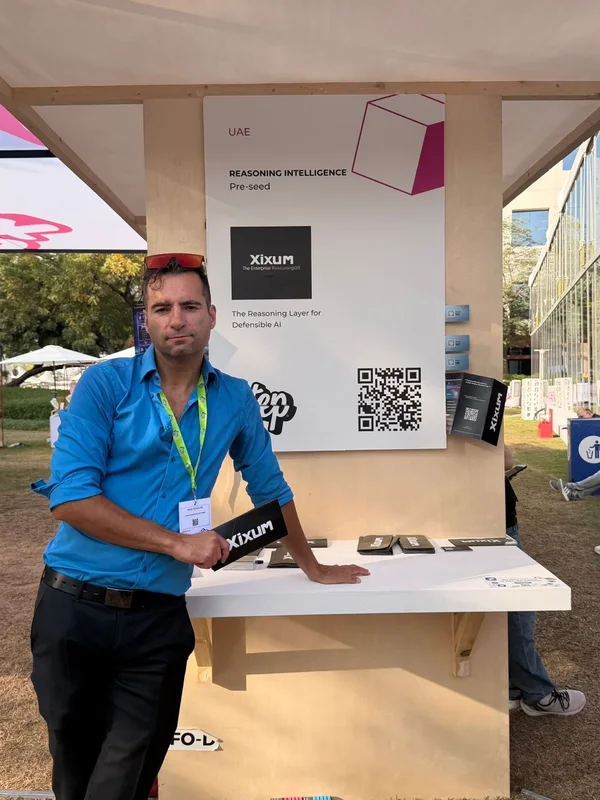
Independent technical advisory in localization, SLAM, and safety-critical AI systems. I focus on structural robustness, certification feasibility, and failure-mode transparency under ISO 26262 and SOTIF.
By the numbers
- 15+ years in safety-critical systems, across automotive, aerospace, and regulated software environments
- 4 publicly funded research projects: SPEDiT, SpesML, HUBCAP, and SafeWahr, alongside numerous industrial tool-qualification engagements
- 3 peer-reviewed publications and 2 preprints on semantic constraints and safety-aware AI architectures
- 1 granted European patent (EP 2646316 B1)
Certified research and development
The research and development behind XIXUM, my deductive AI system, is certified under the German Research Allowance Act (Forschungszulagengesetz, FZulG). In 2026 the Bescheinigungsstelle Forschungszulage confirmed it as genuine research and development, an independent federal assessment of the substance of the work rather than the case made for it. The certified research is conducted by FelixSchallerCOM; XIXUM is the commercial product built on it.

Engineering principles that guide my work
Robust autonomy systems are built on explicit assumptions, structural clarity, and measurable failure boundaries, not on optimism or benchmark performance alone.
Determinism. Safety-critical systems require traceability and well-defined state transitions. Where probabilistic components are used, their limits must be explicit and observable.
Structural robustness. Accuracy does not equal stability. I evaluate localization and SLAM systems based on observability limits, ambiguity handling, and real-world degradation behavior.
Certification awareness. ISO 26262 and SOTIF are architectural constraints, not documentation exercises. System design must anticipate auditability, reproducibility, and safety evidence generation from the start.
Strategic insight. Technical depth. Trusted execution.
I help autonomy and AI teams reduce technical uncertainty, expose system-level risks, and prepare complex products for real-world deployment, certification, and investor scrutiny.
Autonomy-specific expertise. Focused on SLAM, perception, localization, system safety, and validation challenges in real-world operating conditions.
Safety and certification mindset. Bridging engineering reality with ISO 26262, SOTIF, safety case preparation, and certification-readiness expectations.
Investor-ready technical clarity. Translating complex architecture, roadmap, and execution risks into clear findings for founders, leadership teams, and private equity stakeholders.
Hands-on technical leadership. Supporting teams not only with assessments, but with practical prioritization, technical direction, and implementation guidance.
From localization theory to certification reality
My work sits at the intersection of autonomy engineering, safety-critical systems, and technical decision-making. With experience across SLAM, perception, localization, and system validation, I help teams understand where autonomy architectures are robust and where hidden risks remain.
Today, I support founders, engineering leaders, and investors with independent technical reviews, certification strategy, and due diligence for autonomy and AI-driven systems.