Perception Pipeline Validation Strategy
A safety argument for ML perception without ground truth.

Make perception performance measurable, and defensible
Perception breaks in the corners: rare scenarios, domain shifts, sensor artifacts, and silent degradations. I help teams design a validation strategy that connects engineering reality with ISO 26262 and SOTIF expectations: clear performance claims, measurable acceptance criteria, scenario-driven coverage, and evidence that stands up in reviews, due diligence, and audits.
I translate "it works well" into explicit performance claims: what the perception stack detects, under which ODD assumptions, and where it fails. Then we build a validation plan covering datasets, ground-truth strategy, metrics, scenario catalog, and regression gates, aligned with ISO 26262 and SOTIF evidence expectations and practical CI/CD constraints.
A practical validation playbook for perception systems
- Performance claims and acceptance criteria. Define measurable detection, track, and localization claims per ODD, including thresholds, confidence handling, and failure boundaries.
- Scenario catalog and coverage model. Build a scenario taxonomy covering weather, illumination, occlusions, and edge cases, and link it to requirements and test evidence.
- Dataset and ground-truth strategy. Recommend data sources, sampling, labeling and ground-truth approach, and bias checks to ensure representativeness and traceability.
- Robustness and degradation testing. Plan stress tests for sensor artifacts, domain shifts, adversarial-like perturbations, and silent failure detection.
- Validation pipeline and regression gates. Define continuous evaluation, dashboards, release gates, and how to prevent metric gaming and drift over time.
- Safety argument and evidence packaging. Structure the results into reviewable evidence: what is proven, what is assumed, residual risk, and mitigation rationale.
How we work
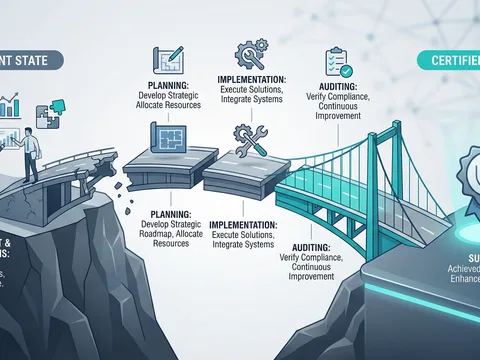
- System intake and ODD framing. Understand sensors, stack boundaries, ODD assumptions, and target claims.
- Metrics, datasets, and scenario model. Define KPIs, scenario taxonomy, and which datasets and ground-truth sources are required for defensible results.
- Test plan and pipeline design. Build a validation pipeline with regression gates, drift monitoring, and release criteria tied to requirements.
- Evidence packaging and review readiness. Produce an audit-friendly evidence package: claims, coverage, results, gaps, and prioritized next actions.